Those Wharf Rats from Louisiana

On May 4, 1863, situated on a rise overlooking the field of battle at Salem Church, Generals Jubal Early and Robert E. Lee stood side by side monitoring Early’s Division as it spearheaded an attack on General John Sedgwick’s 6th Corps. The two were witness as a Brigade of Louisiana Tigers charged into the Federal line.

“The air was fairly hissing with round shot, shell, grape, canister and minie balls.” Still, the Louisiana Tigers pushed forward, seemingly impervious to enemy fire. Soon contact was made and the federal line appeared to crack; and then it collapsed all together. The Tigers swept on to a second line, which similarly buckled. Soon the whole Union position appeared to be crumbling. Jubal Early was so electrified by the outcome he threw his hat to the ground, and yelled: “Those damned Louisiana fellows may steal as much as they please now!” Lee sighed and responded by saying: “Thank God! The day is ours!”

Salem Church map

Charge of the Louisiana Tigers at the Battle of Salem Church

The first commander of these renowned warriors was a southern planter named Richard (Dick) Taylor. Born January 27, 1826, on the family’s Springfield Plantation in Jefferson County Kentucky, he was the only son of Zachary Taylor, the twelfth president of the United States. Much of Richard’s early life had been spent in frontier forts as his father was a career military officer. When apart from his dad he spent a good portion of his early life attending private schools in both Kentucky and Massachusetts. He would later pursue academic studies at both Harvard and Yale.

Dick Taylor

Richard (Dick) Taylor

During the Mexican War Richard Taylor would serve, voluntarily, as his father’s aide-de-camp. Forced to leave Mexico due to a bout with rheumatoid arthritis, however, Richard would return home to manage the family’s estate. In 1850 he persuaded his father, then President of the United States, to purchase a moderately sized cotton plantation for him, in St. Charles Parish, Louisiana. In so doing Taylor’s connection to that state was established.

When the Civil War broke out General Braxton Bragg asked Dick Taylor to come with him to Pensacola, Florida to assist with the training of Confederate troops. Though Taylor had been opposed to secession, he agreed to do so.

Dick Taylor’s stay there would be brief. When the 9th Louisiana Regiment was organized in early 1861, Taylor was elected colonel of the regiment. Members voted for him in the believe that his connection to President Jefferson Davis would allow them to be rapidly dispatched to a combat zone. Until the time of her death, Davis had been married to Dick Taylor’s sister, Sarah.

The connection seemed to work as the regiment was promptly shipped off to Richmond. The unit would arrive at Manassas on July 21, 1861, on the very day of the First Battle of Bull Run. Unfortunately for them, though, they would arrive too late in the day to participate in the first major clash of the Civil War.

On October 21, 1861, Dick Taylor was promoted to brigadier general and placed in command of the Louisiana Brigade. Assigned to General Richard S. Ewell’s Division, this new posting would allow them to become a key element in Stonewall Jackson’s 1862 Valley Campaign.

Dick Taylor’s Louisiana Brigade

6th Louisiana Infantry – Col Isaac G. Seymour

7th Louisiana Infantry – Col Harry T. Hays

8th Louisiana Infantry – Col Henry B. Kelly

9th Louisiana Infantry – Col Leroy A. Stafford

Wheat’s Battalion (“Louisiana Tigers”) – Maj C. Roberdeau Wheat

Wheats batallion

Wheat’s Battalion of Louisiana Tigers

The fierce reputation the Louisiana Tigers would soon earn was well deserved. Author Terry Jones would note: “Louisiana probably had a higher percentage of criminals, drunkards, and deserters in its commands than any other Confederate state…” Though it was Major Roberdeau Wheat’s Battalion from which the Louisiana Tigers would get their name, their reputation for “wholesale rioting, looting, and robbery” they earned on their own.

Jackson would rapidly find a use for Taylor’s brigade “as an elite strike force that set a rapid marching pace and dealt swift flanking attacks.” On May 21, 1862, they were attached to General Stonewall Jackson’s command and were destined to be a key component in the Rebel victory at Front Royal. Here they would distinguish themselves by traversing a burning bridge over the Shenandoah River while under enemy fire, and by seizing a large Federal supply train.

By late evening on May 24, General Richard Taylor’s Brigade of Louisianans was exhausted. They had marched, and countermarched, more than twenty miles. They had fought a skirmish at Middletown, and they had looted captured wagons belonging to “Commissary Banks.” Their motion had been constant and they would not settle in to rest until nearly 3:00 a.m. the following morning.

By sunrise on May 25, battle seemed imminent. The first soldiers roused and placed into line to oppose General Nathaniel Banks’s Army at Winchester, was General Charles Winder’s Stonewall Brigade. More than fifteen hundred strong, and with little more than two hours rest, these soldiers were ordered to advance and form a skirmish line near Hollingsworth’s Mill along Abram’s Creek. Here two farm lanes pushed off to the west circling around the Federal position at Bower’s Hill. Two sections of Union artillery and seven regiments of infantry had been placed there, and were currently raising havoc with Rebel forces.

1st Winchester map

Map Showing Dick Taylor’s Flank Attack at the 1st Battle of Winchester

By 7 a.m., Jackson had massed fifteen regiments on the west side of the Valley Pike, opposing Colonel George H. Gordon’s 3rd Brigade. Colonel John Campbell and Colonel William Taliaferro’s brigades were soon added to reinforce and extend the Confederate line farther to the left.

It was Brigadier General Charles Winder, commander of the Stonewall Brigade, who suggested the army’s next move. McHenry Howard, aides-de-camp to General Winder recalled: “General Jackson presently came on the scene and asked how the battle was going on. General Winder told him the enemy ought to be attacked on his (the enemy’s) right flank. ‘Very well,’ Jackson said, ‘I will send you up Taylor,’ and rode off.”

McHenry Howard

McHenry Howard

General Taylor’s men had also been awakened by 5:00 a.m. and had been ordered to prepare for battle. Within minutes, however, one of Jackson’s orderlies came riding through the heavy morning fog and told Taylor he must advance immediately. Taylor rode ahead and found General Jackson with his artillery. At that very moment they were “being pounded in a duel with federal guns placed on a hill anchoring the Union right.” “Jackson pointed to the enemy battery and told Taylor he must circle around to the left and silence the guns before they decimated the Confederate artillery.”

Taylor rode back to his brigade and began pushing his men toward the enemy’s guns. Soon General Jackson appeared at his side. The Tigers let out a cheer upon seeing him which was immediately hushed by Taylor so that their position might not be compromised. Instead, the Louisianans lifted their hat in salute, a gesture which was immediately returned by Jackson.

It was soon apparent the commotion had been detected by federal artillerymen as Taylor’s men began to receive cannon fire. Several men were hit by the projectiles which caused many others to duck reflexively. Witnessing this as an act of cowardice, Taylor screamed at his men. “What the hell are you dodging for? If there is any more of it, you will be halted under this fire for an hour.” Most of them straightened themselves up “as if they had swallowed ramrods.” Jackson scolded Taylor saying, “I am afraid you are a wicked fellow.”

With the morning fog serving as cover, Taylor was able to deploy his men unseen. About 7:30 Taylor motioned his men forward which was executed in “a steady walk” and without firing a shot. Suddenly the sun broke through the fog. Off to the left of the line a squadron of 1st Michigan cavalry was spotted. When the cavalry charged, Colonel Kelly’s 8th Louisiana fired a quick volley routing them completely.
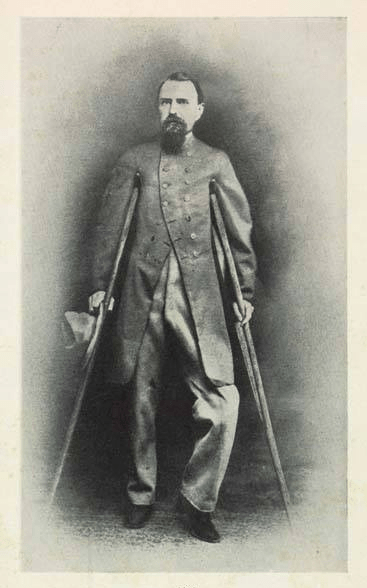
John Worsham

John Worsham

Private John Worsham, a member of Company F, 21st Virginia Infantry recalled: “General Taylor rode in front of his brigade, drawn sword in hand, occasionally turning his horse, at other times merely turning in his saddle to see that his line was up. They marched up the hill in perfect order, not firing a shot. About half way to the Yankees he gave in a loud and commanding voice, that I am sure the Yankees heard, the order to charge!”

Rather than redeploying his men to counter the Rebel buildup on his right flank, Union Colonel George Gordon ordered Major Wilder Dwight to go the right to count the enemy. By the time Dwight complied with his orders and reported back to Gordon, it was too late. General Taylor and his Tigers were already pitching into Gordon’s troops.

Henry Kyd Douglas, the youngest member of General Jackson’s staff, was an observer to the assault rendered by the Louisianans. He wrote: “General Taylor threw his brigade into line where directed, and it moved forward in gallant style. I have rarely seen a more beautiful charge. This full brigade, with a line of glistening bayonets bright in that morning sun, its formation straight and compact, its tread quick and easy as it pushed on through the clover and up the hill, was a sight to delight a veteran.”

John Worsham noted “there was all the pomp and circumstance of war about it that was always lacking in our charges; but not more effective than ours which were inspired by the old rebel yell, in which most of the men raced to be foremost.”

Taylor’s charging Louisianans easily overwhelmed the 27th Indiana, and  29th Pennsylvania. This forced Lieutenant Colonel George Andrews to withdraw the 2nd Massachusetts as well. Soon every federal soldier was running for his life. The federals desperately tried to reform their line to resist the attack but it was hopeless. The whole Union force was routed back into the streets of Winchester.

Jackson was surprised by the quick success of Taylor’s men. He turned to Douglas and said: “Order forward the whole line, the battle’s won.” As Taylor’s men came sweeping by, Jackson cried out: “Very Good! Now let’s holler!” Jackson “raised his old grey cap, his staff took up the cheer, and soon from the advancing line rose and swelled a defining roar, which born on the wind over Winchester told her imprisoned people that deliverance was at hand.”

For the troops from the Pelican State, who had sacrificed their lives to free Winchester, their deeds were promptly recognized. Taylor’s Brigade “was the toast of the army.” “Jackson galloped up to Taylor and gratefully shook his hand in a silent gesture, which the Louisianian claimed was worth a thousand words from another.” Taylor wrote: “All the Virginia troops in this Army say that we beat any body they ever saw in a charge and now they say we can stand as long under a murderous fire as any troops in the World.”

Private Worsham noted: “Gen. Jackson captured vast stores: several hundred beef cattle, several hundred wagons with their teams, eleven thousand new muskets in boxes that had never been opened, a large amount of ammunition, and over three thousand prisoners. Jackson lost a very small number of men, but he had led us for three weeks as hard as men could march. In an order issued to his troops the next day, he thanked us for our conduct, and referred us to the result of the campaign as justification for our marching so hard. Every man was satisfied with his apology; to accomplish so much with so little loss, we would march six months! The reception at Winchester was worth a whole lifetime of service.”

Though the battle had taken place on a Sunday, when Jackson and his troops entered Winchester the church bells remained silent. “The streets were lined with people, but not on their way to sanctuaries; they had come to meet their own troops, who soon forgot their fatigue in the joy of their reception.” The residents of Winchester “were in a state of jubilant excitement.”

The cost of the victory to the troops from Louisiana was profound. Fourteen men were dead and eighty-nine wounded. Several officers were included in these numbers. Major Arthur McArthur of the 6th Louisiana was killed, and Lieutenant Colonel Francis would lose his left arm to amputation when his elbow was shattered by a minae ball.

Courage and obstinance in battle would be part of the legacy left behind by the Louisiana Tigers. In less than a month they would be the ingredient whose costly charge enabled the capture of the Coaling and secured victory at Port Republic. There would also be numerous other Confederate victories over the remaining three years of war in which the Tiger’s would play a pivotal role.

During the course of the war over three thousand Louisiana soldiers were killed in battle. Their mortality rate was nearly twenty-five percent. Their sacrifice was great. When the two Louisiana Brigades, ten regiments in all, finally surrendered, there were only 373 men left in the ranks. The 10th Louisiana had just sixteen men present at the surrender while the 9th had only sixty-eight.

“They were a rough and tumble lot – eager to fight, even more eager to drink and play. Cursed and branded as devils by civilians, welcomed as a godsend by cornered generals, the Louisiana Tigers contributed a colorful chapter to that era of American history known as the Civil War.” General Dick Taylor would play a major role in that legacy.


Douglas, Henry Kyd. I Rode with Stonewall: The War Experiences of the Youngest Member of Jackson’s Staff, The University of North Carolina Press. Chapel Hill, N.C. 1968

Ecelbarger, Gary. Three Days in the Shenandoah: Stonewall Jackson at Front Royal and Winchester. University of Oklahoma Press. Norman, Ok. 2008.

Jones, Terry L. Lee’s Tigers: The Louisiana Infantry in the Army of Northern Virginia. Louisiana State University Press. Baton Rouge. La. 1987.

Parrish, T. Michael. Richard Taylor: Soldier Prince of Dixie. University of North Carolina Press. Chapel Hill, NC. 1992.

Taylor, Richard. Destruction and Reconstruction. Da Capo Press. 1995

Worsham, John H. One of Jackson’s Foot Cavalry, his Experience and what he saw During the War 1861-1865. Wentworth Press. 2016

Stonewall Back in Town

https://upload.wikimedia.org/wikipedia/commons/9/93/Chancellorsville
Battling Along the Back Road

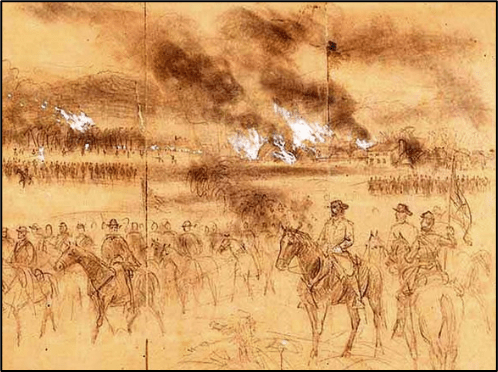
burning of Valley

Custer’s Division Retiring from Mount Jackson in the Shenandoah Valley, October 7, 1864, by Alfred R.Waud (Library of Congress)

Between September 26 and October 9, 1864, the Shenandoah Valley’s agricultural production and processing capacity was targeted and demolished. Author Jeffry Wert would note: “Americans had never before seen such demolition, executed with such skill and thoroughness.” The event, which would become known as “The Burning,” would be a methodical two-week crusade to destroy the Shenandoah Valley as the “Breadbasket of the Confederacy.” Crops, barns, farm buildings, mills and even dwellings would be incinerated. Stores of grain, crops, and livestock would be destroyed or appropriated for the use of the Union Army. This was “total warfare” brought to the doorsteps of a civilian population.

General Ulysses Grant advised Chief-of-Staff Henry Halleck to see to it that General Jubal Early’s Army was shadowed by “veterans, militia men, men on horseback, and everything that can be got to follow,” with explicit orders to “eat out Virginia clean and clear as far as they go, so that crows flying over it for the balance of the season will have to carry their own provender with them.”

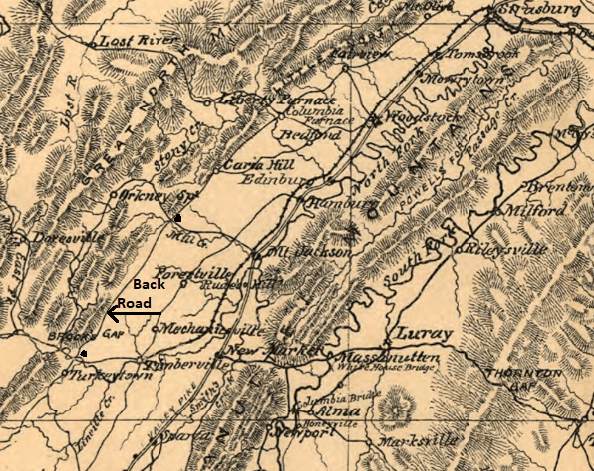
On October 6, George Custer’s 3rd Division broke camp at Dayton, Virginia near dawn, and proceeded in a northerly direction along the North River until they reached the Back Road in the town of Spring Creek. Here fiery destruction was expected to begin in earnest. The targets, however, were to be the “farms inhabited by peaceful Mennonites and Dunkards.” General Custer was sympathetic to the plight of these people and there is no indication that he allowed any of their farm buildings to be torched. Only the grist mills were targeted.

Once Custer’s men crossed the Dry River, however, having left the farms of the Mennonites and Dunkers behind them, the burning began in earnest. Custer’s troopers pushed on gathering livestock of every variety; slaughtering those they could not secure. Union troopers were told “to take all the stock, and to destroy all the supplies on the back road.”

Back Road

Map Showing the Back Road and the Battlefields of Brock’s Gap and Mill Creek.

Cavalry leader General Thomas Rosser commanded the Laurel Brigade, as well as that of General Williams Wickham’s. Evidence of the magnitude of Custer’s efforts would begin to show itself shortly after sunrise. It did not take long for Rebel troopers to mount up and commence their pursuit of Union cavalry. Private Beverly Whittle of the 2nd Virginia Cavalry was involved in the chase. As he progressed along the Back Road he noted: “All along our route were burning barns houses the very air is impregnated with the smell of burning property.” The “Fertile Valley of Virginia is one vast cloud of smoke.”

Newton Burkholder had, early in the war, been a Confederate soldier and later, since January of 1863, a telegraph operator in Harrisonburg. When Union occupation had forced his office to close, Newton had joined a group called the “Winfield’s Guerillas.” As a result, Newton would be a witness to the destruction that was unfolding in the valley. On October 6, 1864 he noted: “Now the whole vale is red with fire mile on mile, and enveloped in smoke high overhead, twisting and writhing, dissolving. See! Yonder goes right at Broadway, John J. Bowman’s mill, Sam Cline’s great stone barn! A sense of our powerlessness oppresses us. Stupidity lays hold on the mind, succeeding consternation. Is the world being set on fire?”

Scores of the men in Rosser’s force had property and family in this part of the Valley. The further they rode the more incensed they became. Confederate troopers were “understrength, underfed and in many cases mounted on horses past their prime.” Enraged, these men were eager to close on the enemy and seek revenge. It did not take long for an opportunity to arise.

James Taylor, who was an artist with Leslie’s Illustrated News, was currently riding with General Custer’s men. In addition to his drawings, Taylor described engagements ascribed to Federal cavalrymen as they burned farm buildings in the Shenandoah Valley. “The main body in columns of fours was in the rear detaching parties to the right and left to burn every mill, barn and haystack to be seen… When the enemy pressed too close, the men would halt and face about, a brisk fullisade would last a few moments, when the graycoats would be off, then trotting on, the rear guard would halt at the edge of the next hill or belt of woods to repeat the operation.”

Battle of Brock's Gap

Map of the Battle of Brock’s Gap

Late in the day on October 6, the 18th Pennsylvania and 5th New York Cavalry had gone into camp near Cootes’ Store at Brock’s Gap. This is the spot where the North Fork of the Shenandoah River pushes through North Mountain at Gap Rock. Here a lane also leads east toward Broadway and New Market. Custer’s men had been held up here for a bit while attempting to drive hundreds of heads of cattle and other livestock across the North Fork of the Shenandoah River. As a result of the delay, Union and Confederate troopers would come into contact.

About 3:30 in the afternoon, troopers in the 2nd Virginia Cavalry were ordered dismounted by Colonel Thomas Mumford and flung against Union cavalrymen who had been posted as skirmishers near Key’s Mill, southwest of the river. When the 4th Virginia Cavalry was added to the attack the Union line began to waver. According to Private Beverly Whittle, as the fighting intensified, the Yankees “broke + ran in confusion.”

Colonel Mumford continued to press his advantage. Custer’s men were soon forced back across Dry River and then across the Shenandoah itself. Some of the New Yorkers panicked and some seventy of them fled to the protection of North Mountain. Rebel horsemen appeared to be on the verge of a significant victory.

Fearing the worst, however, General Custer sent a request to his artillery commander for support. Captains Charles Pierce and Dunbar Ransom brought up their “artillery and posted it on a high hill.” With Union artillery added to the mix, Custer’s retreat was quickly halted and order was soon restored. Even the New Yorkers, who had fled westward into the hills in panic, soon return to the ranks. As Confederate cavalry had no artillery support available, they too withdrew.

The following morning General Rosser continued to nip at the heels of Custer’s troopers as they continued to burn the farms along the Back Road. Custer was now operating in Shenandoah County. The further the men of the Laurel Brigade rode, the more complete the destruction became.

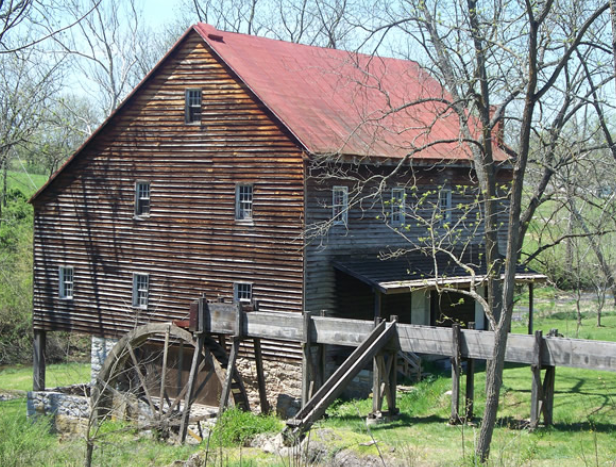
Most of the mills, excluding Zerkel’s Mill at Forestville, were soon consumed by fire. The owner, Samuel Hockman, anticipating impending destruction “ran to the top floor of the mill, leaned out a window under the eaves of the structure, and nailed a United States flag to the peak of the roof.” By acting quickly, and by welcoming Union Cavalry, he was able to save the structure.

Zirkel mill.png

Current Photo of Zerkel’s Mill in Forestville.

Colonel James H. Kidd of Custer’s brigade described the scene as they continued to set fire to Valley structures: “What I saw there is burned into my memory. The anguish pictured in their faces would have melted any heart not seared by the horrors and ‘necessities’ of war. It was too much for me and at the first moment that duty would permit I hurried from the scene.”

Rosser’s men continued to pursue the enemy. George Pond believed the Confederate “zeal was due in part to the excitement of his men at seeing their farms and homes in flames; for many of Early’s cavalrymen were from the region. Their eagerness to extract retribution brought upon them double mortification and suffering.”

Battle of Mill Creek

Map showing Troop movements During the Battle of Mill Creek.

About 3:00 in the afternoon of October 7, the Laurel Brigade reached Mill Creek along the Back Road in the area known as Mount Clifton. Here he found Custer’s men on the opposite bank, once again, stalled just north of the ford by hundreds of heads of livestock, and human refugees. Still lacking artillery support, Rosser quickly ordered Colonel Richard Dulany to take Elijah White’s Battalion of the 35th Virginia, and the 7th Virginia Cavalry downriver to the lower ford and attack Custer on his left flank. Dulaney, encountering Union scouts as soon as he crossed Mill Creek, continued to push on. He quickly ordered the 7th Virginia, with 220 troopers, to charge.

Lieutenant Colonel John Bennett’s 1st Vermont Cavalry, about four hundred strong, were there to greet the charging Virginians. Many of these Green Mountain boys were raw replacements, newly arrived from Vermont. Though a request was sent out for reinforcements only a small detachment from the 8th New York and the 1st New Hampshire Cavalry answered the call. Though the odds were in Federal’s favor, enthusiasm and the desire for revenge was on the side of the Confederates.

While Captain Dan Hatcher led the 1st Squadron of the 7th Virginia Cavalry on its flank attack, Delaney conferred with Captain Frank Myer of White’s Comanches. Myer’s asked for orders, but due to the noise and confusion of the moment, it was impossible to understand each other. Myer’s returned to his men and would act on his own impulses.

On his return, Union troopers were putting up a heavy rifle fire with their Spencer and Henry repeating rifles. “Knowing that his men could not remain in that position a minute longer, Myer’s gave the order to charge, which was performed in the most brilliant style. This he did “with his customary dash.” Just as Hatcher began his attack, General Rosser ordered the 11th and 12th Virginia to charge directly across the stream.

The Comanches now numbered less that two hundred men. “In a very brief space the battalion was among the Yankees. Neutralizing their superiority in numbers and carbines by a very free use of their pistols and sabers.” Custer’s men “put forth a feeble resistance and quickly fell back to their main force.” Though the Confederates “could not get within sword’s distance of their enemy”, the Federals could not withstand the power of the attack.

Custer was soon forced to withdraw north and west along Mill Creek. The fighting would continue until nightfall when Rosser’s men drew back. Overwhelmed, Custer’s troopers retreated under cover of darkness. Casualties were light for both sides. The 7th Virginia had two men killed and one captured. The Comanches “had several men wounded, among them Captain Myers, but none were killed or very badly hurt.”

Mill Creek Sign

State Sign for Battle of Mill Creek.

Rosser would recapture several hundred head of sheep and cattle following the Battle of Mill Creek. He would attempt to return the livestock to the locals. The effort was well received by the residents of the Valley. They would label General Rosser the “Savior of the Valley” as a result of his efforts. It was a brand Rosser would savor for the rest of his life.

Late on October 7, Sheridan would report to Grant: “I have destroyed over 2,000 barns filled with wheat, hay and farming implements; over 70 mills, filled with flour and wheat; have driven in front of the army over 4,000 head of stock, and have killed and issued to the troops not less than 3,000 sheep.”

Mill Creek Battlefield

Current Day Photo of Mill Creek Battlefield.  Mill Creek Runs Left to Right Just Beyond the Trees at the End of the field.

On the morning of October 9, 1864, General Custer and six thousand cavalrymen would sit opposite General Rosser’s thirty-five hundred troopers at Tom’s Brook. Many of these men were posted along the borders of the Back Road. Battle was imminent. Private George W. Hunt of the 15th New York Cavalry watched as General Custer rode beyond his line and addressed his opponent. “In plain view of both armies…Sweeping off his broad-brimmed hat, he threw it down to his knee in a profound salute to his foe.” “Custer replaced his hat, turned to his line of men and the next moment the 3rd Division was sweeping on at a trot, the flaming neck tie and bright curls of Custer before all…” Rosser’s cavalrymen were quickly routed. As a result he battle would be dubbed “Woodstock Races.”

Toms Brook Map

Battle of Tom’s Brook or Woodstock Races

Following the war, General Rosser would divulge his feelings about the enemy and the burning of the Valley. “The soldiers who were required by Gen. Sheridan to lay waste the beautiful Shenandoah Valley with the torch were brave, good men, and were blameless in the part they took, for they only did as they were ordered, and every prisoner seemed heartily ashamed such a cowardly means had been employed in the endeavor to crush a brave people who never declined battle. And who could at all times have been met on the field under the rules and customs of civilized war.”

Warfare in the Shenandoah Valley would soon terminate following the decisive Battles of Tom’s Brook and Cedar Creek. The families, and their descendants, however, would long remember the acts perpetrated by General Sheridan’s troopers. The scars are still evident. Some of the ruins are still visible. In the end, total war, though seldom executed prior to the Civil War, would, regrettably, become the standard for modern armies.

http://www.shenandoahatwar.org/red-with-fire-the-burning-of-the-shenandoah-valley/

https://www.nps.gov/cebe/learn/historyculture/the-burning.htm

https://www.hottelkeller.org/wp/home/museum/the-battle-of-toms-brook/

Armstrong, Richard L. 7th Virginia Cavalry. H. E. Howard Inc. Lynchburg, Virginia. 1992.

Barringer, Sheridan. Custer’s Grey Rival: The Life of Confederate Major General Thomas Lafayette Rosser. Fox Run Publishing. Burlington, N.C. 2016.

Burkholder, Newton. The Barn Burners: A Chapter of Sheridan’s Raid up the Valley. Southern Historical Society Papers. Volume XXVIII. Richmond, Va. 1900.

Miller, William J. Decision at Tom’s Brook: George Custer, Thomas Rosser, and the Joy of the Fight. Savas Beatie. El Dorado Hills, Ca. 2016

Myers, Frank M. The Comanches: A History of White’s Battalion, Virginia Cavalry. Kelly, Piet & Co., Publishers. Baltimore, Md. 1871.

Taylor, James E. With Sheridan Up the Shenandoah Valley. Morningside House, Inc. Dayton, Oh. 1989,